ABSTRACT
Contemporary networked image cultures cannot be understood outside of platform capitalism. Today, the production, distribution and reception of visual media is largely managed and controlled by the algorithmic infrastructures, corporate policies and business models of digital platforms. At the heart of platform architectures is the quantification, evaluation and monetization of reactions – whatever we encounter online is designed to trigger our reactions, and our reaction patterns in turn drive the visual economies of platform capitalism. With algorithmically curated feeds and personalized content, what we get to see online and how we react to it is inextricably linked in ways we can often only speculate about.
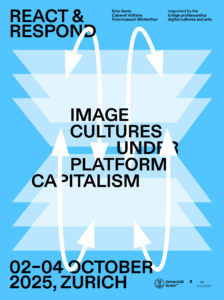
Bringing together scholars and artists from a range of fields and backgrounds, the international conference «React & Respond» aims to map and analyze these contemporary economies of networked image cultures and their aesthetic, ideological and political implications.
Following an opening night with a screening at Kino Xenix on Thursday, October 2nd, the conference will continue on Friday, October 3rd, at Cabaret Voltaire and conclude on Saturday, October 4th, at the Fotomuseum Winterthur.
SCHEDULE
Opening Night
2. October 2025, from 18:30
Kino Xenix Bar, Kanzleistrasse 52, 8004 Zürich
From 18:30 Apéro & Arrival
20:15–21:45 Platform Realities – Screening & Discussion
with Nicolas Gourault, Occitane Lacurie
Moderation: Roland Meyer
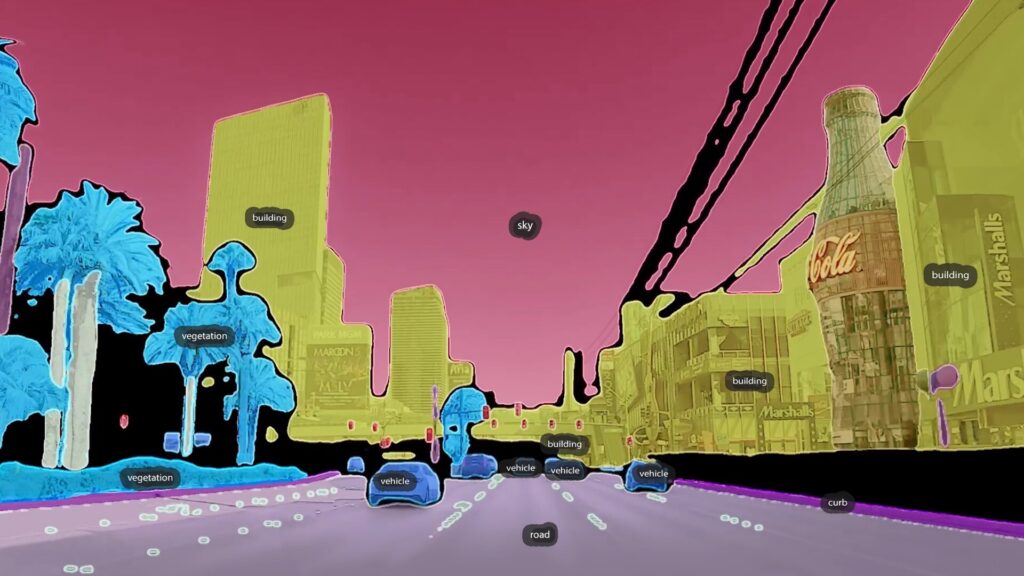
Two short films show how digital platforms govern everyday life – from the subtle surveillance of one’s own body to precarious data work in the Global South. Xena’s Body (2024) by Occitane Lacurie uses the example of period tracking apps to show how intimate interaction with the continuous stream of images and data on smartphones exposes the female* body to a largely invisible form of surveillance. Their Eyes (2025) by Nicolas Gourault shows the often invisible, precarious work of data workers in the Global South, who are tasked with making the visible world readable for AI pattern recognition by classifying and annotating vast amounts of digital images. In the accompanying discussion, the filmmakers will consider how film can be used to convey realities whose experience is increasingly mediated, filtered, and controlled by digital interfaces and algorithmic pattern recognition.
Conference Day 1
3. October 2025, 9:30–18:30
Cabaret Voltaire, Spiegelgasse 1, 8001 Zürich
09:30–10:00 Coffee & Arrival
10:00–10:30 Introduction to the Conference
10:30–12:30 Platform Aesthetics & Meme Politics
with Annekathrin Kohout, Simon Strick, Valentina Tanni
Moderation: Kathrin Trattner
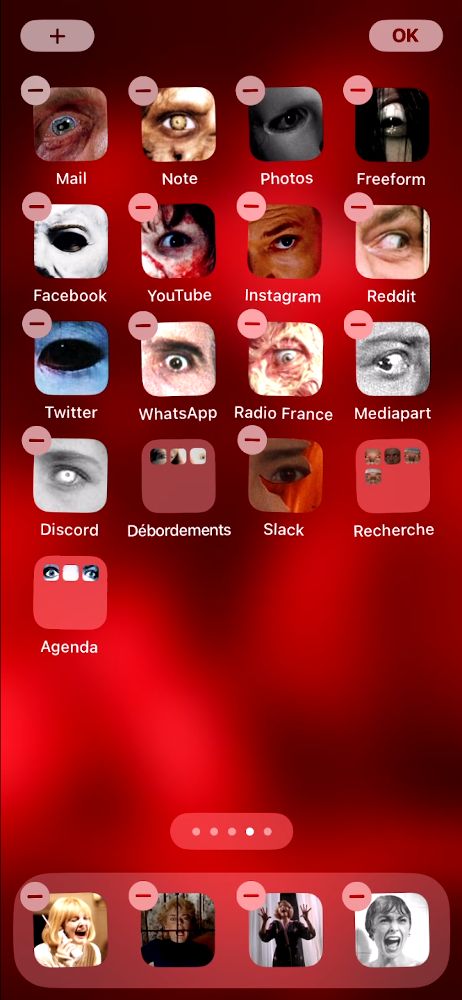
Networked image production is increasingly defined by escalating chains of reaction in which images are made to react to other images, comment on each other, and express affects and attitudes towards what we see online. With the proliferation of AI-generated media, optimised to trigger user interactions and reactions, aesthetic preferences and ideological expectations of potential consumers are reinforced and automated. By considering how memes, emojis, reaction GIFs and video responses turn reactions into a mode of content production, the panel navigates the politics of content under platform capitalism.
12:30–14:00 Lunch Break
14:00–16:00 Patterns of Automation
with Ranjodh Singh Dhaliwal, Felix Stalder, Tiziana Terranova
Moderation: Roland Meyer
By which means do platform architectures foster and accelerate the increasing automation of online content production? The panel zooms out to the infrastructural and economic conditions which determine our contemporary networked images cultures. Quantifiable reactions are not only constantly tracked, aggregated and monetized by online platforms, but also predicted, premediated and transformed into exploitable behavioral data on a massive scale. How are users and consumers integrated into the feedback loops of value creation, and what forms of social production provide the basis for today’s reaction economies?
16:00–16:30 Coffee Break
16:30–18:30 Training Rounds & Testing Grounds
with Adio Dinika, Ariana Dongus
Moderation: Lars Pinkwart
Im Kontext sogenannter «generativen KI» gibt es immer einen «human in the loop» – menschliche Arbeit welche oftmals auf Ausbeutung beruht und unsichtbar bleibt. Das Panel befasst sich mit den globalen Arbeitsbedingungen, die dem Plattformkapitalismus zugrunde liegen, den Praktiken und Techniken, mit denen Datenarbeiter auf Bilder reagieren, und den herausfordernden Bedingungen dieser Art von Arbeit, die oft abschätzig als «clickwork» eingestuft wird. Wie können wir auf diese Bedingungen reagieren, und wie können Datenarbeiter*innen diskursive Macht in Bezug auf die Datenpraktiken von Plattformen zurückgewinnen?
Conference Day 2
4. October 2025, 10:00–15:00
Fotomuseum Winterthur, Grüzenstrasse 44-45, 8400 Winterthur
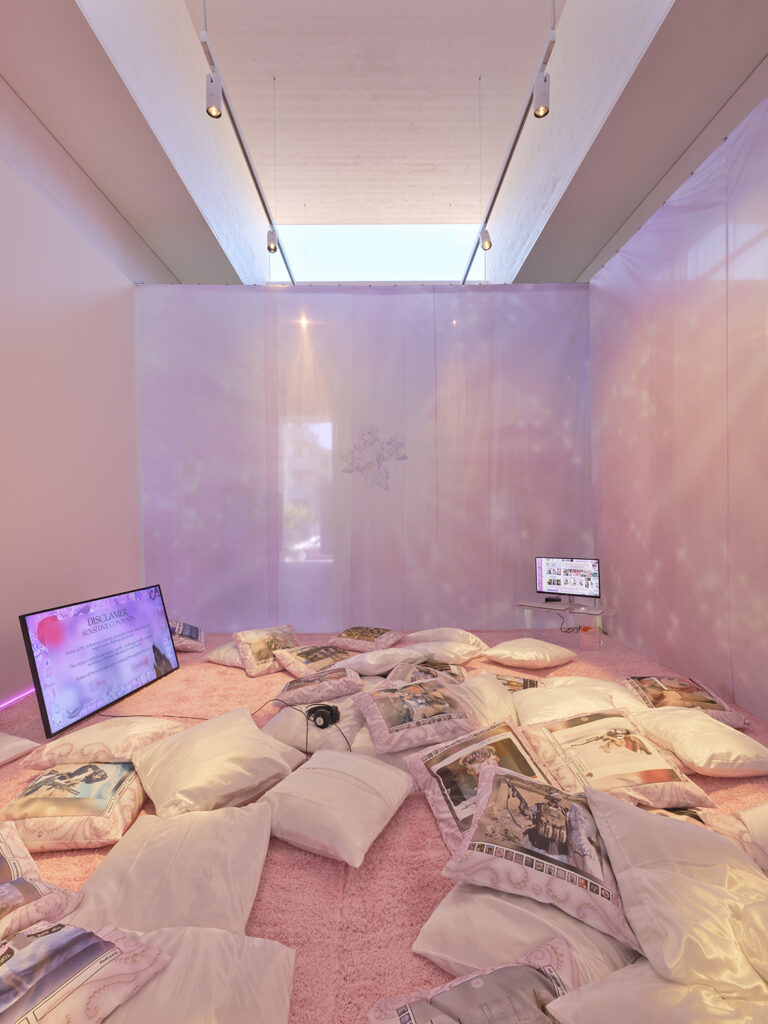
10:00–12:30 Aesthetic Responses
with Sara Bezovšek, Marie-France Rafael, Noura Tafeche
Moderation: Marco De Mutiis
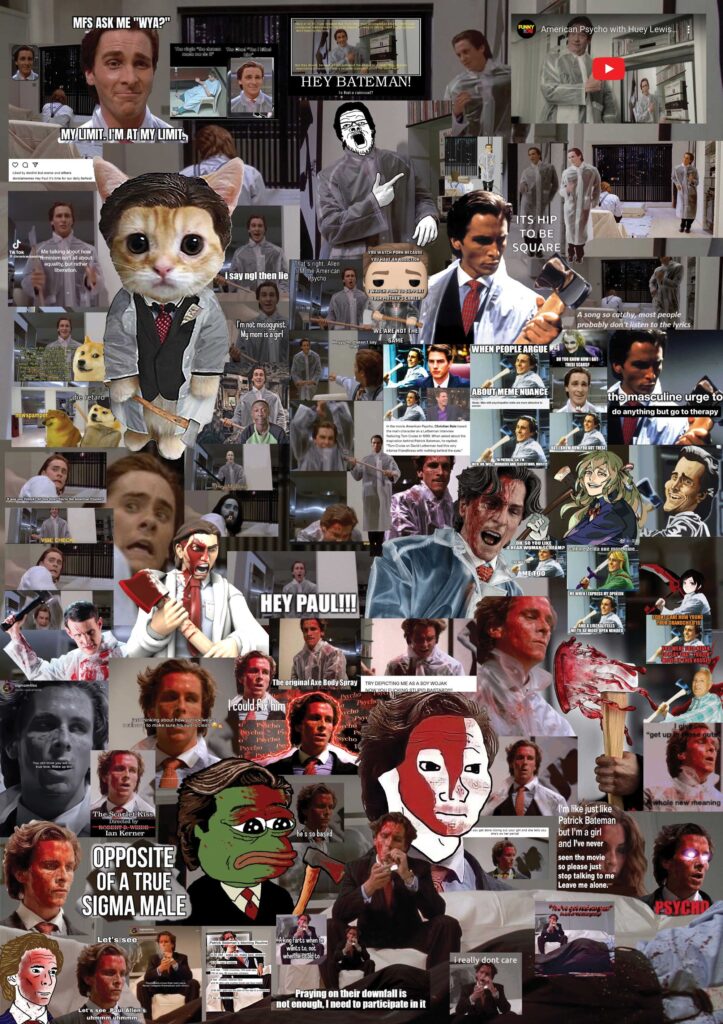
What is the potential of artistic interventions in response to the conditions of platform capitalism? Engaging with the works of Noura Tafeche and Sara Bezovšek in the exhibition «The Lure of the Image», the panel approaches the way arts-based methodologies critically mobilise and re-appropriate the image worlds and aesthetics of platform capitalism, playing off and subverting the mechanisms of our contemporary reaction economies.
12:30–14:00 Lunch Break
14:00–15:00 «The Lure of the Image» – Guided Tour
with Marco De Mutiis
REGISTRATION
The conference is open to all interested guests. As places are limited, we kindly ask you to register Link.
ORGANIZATION
The conference is organized by the DIZH Bridge Professorship Digital Cultures and Arts at the University of Zurich and the Zurich University of the Arts in cooperation with Fotomuseum Winterthur, Kino Xenix und Zentrum Künste und Kulturtheorie (ZKK).


SPEAKERS
Adio-Adet Dinika is a researcher at the Distributed AI Research Institute (DAIR) and co-lead of the Data Workers’ Inquiry project. With fieldwork across Kenya, South Africa, Rwanda, and beyond, his research explores labor dynamics in the AI-driven economy, platform governance, and decolonial perspectives on technology. He holds a PhD in Political Science from BIGSSS in Germany and has contributed to global studies on AI ethics and socio-economic impacts. He is also an affiliated researcher at the Weizenbaum Institute and an advisory member of the Platform Governance Lab at ZeMKI, University of Bremen. Beyond academia, his essays and op-eds have appeared in Noema Magazine, Africa in Fact, and other outlets.
Annekathrin Kohout is a cultural theorist, writer, and editor specializing in digital image cultures and contemporary media. She received her PhD in 2021 and co-edits the book series „Digitale Bildkulturen“ as well as the journal „POP. Kultur und Kritik“. She also serves on the editorial boards of the „Journal of Global Pop Cultures“, AICA (Association Internationale des Critiques d’Art), and the Goethe-Institut. As a non-fiction author, she has published widely on internet feminism, nerd culture, and K-Pop, and regularly teaches as a visiting professor and lecturer at universities and art schools. Her most recent book, “Hyperreaktiv. Wie in Sozialen Medien um Deutungsmacht gekämpft wird” (Hyperreactive: How the Battle for Interpretive Power is Being Fought on Social Media), was published in September 2025.
Ariana Dongus is a Berlin-based media scholar studying AI’s social life—digital labor, biometric control, and its hidden infrastructures. Her fieldwork spans Istanbul, Diyarbakır, and northern Iraq on refugees, migration, and technology. From 2018–2022 she taught media theory and coordinated KIM at HfG Karlsruhe; after 2022 she was a research associate with Orit Halpern at TU Dresden (2023–2024). In 2021 she received the AI Newcomer Award (BMBF). She frequently gives lectures and workshops (TU/UDK Berlin, University of Copenhagen, Harun Farocki Institut). Recent work includes the essay Experimental Economies of Exclusion with System of Systems. She advises the journal Marxism and Sciences and consults the German Informatics Society on AI and data.
Felix Stalder is a professor the Zurich University of the Arts, teaching in the Department of Fine Arts “art:ifical studies” major. His work focuses on the intersection of cultural, political and technological dynamics, in particular on new modes of commons-based production, copyright, datafication, AI, and transformation of subjectivity. He not only works as an academic, but also as a cultural producer, as long-time moderator of <nettime>, a crucial nexus of critical net culture, first for the email list, now for its node in the fediverse. He is a member of the World Information Institute and the Technopolitics Working Group, both based in Vienna. He is the author/editor of numerous books, among others Digital Solidarity (PML & Mute, 2014), Kultur der Digitalität / Digital Condition /字 状况 (Suhrkamp, 2016/Polity Press, 2018, School of Public Art, 2023), Aesthetics of the Commons (Diaphanes, 2021), Digital Unconscious (Autonomedia, 2021), From Commons to NFTS (Ljubliana 2022) and “Contemporaneity in Embodied Data Practices” (Sternberg Press, 2025).
Marie-France Rafael is a professor for “Art in Context” at the Zurich University of the Arts. She studied Art History and Film Studies in Berlin and Paris. From 2011 to 2015 she was a research associate at the Free University of Berlin and until 2019 at the Muthesius University Kiel, Department of Spatial Strategies/Curatorial Spaces. In her research, writing, and teaching, she seeks to theorize the role played by contemporary art in human agency and social practices. In work that reflects her transdisciplinary approach—encompassing film and media, visual studies, and social studies—she explores how the entanglement of art with cultural and social practices is always reflective of a historical moment. This has led her to focus on how digitalization in contemporary art has taken on a new kind of presence—it is no longer just a virtual sphere of sociality, but increasingly, a technological interface that structures our embodied experiences. Her research and teaching is guided by questions on art and cultural history, gender constructions, image and media theory. Her books include among others Passing images: art in the post-digital age (Floating Opera Press, 2022), Raphaela Vogel: Outside Form (Floating Opera Press, 2023), and Reisen ins Imaginativ: künstlerische Situationen und Displays (Walther König, 2017).
Nicolas Gourault is an artist and filmmaker based in Paris (FR) with a background in visual arts and visual studies. He has worked with Forensic Architecture before graduating from Le Fresnoy, Studio national des arts. His work is imbued with this double training, navigating between online open-source investigations and the critical use of new media as documentary tools. His films and video installations explore the power relationships embedded in technologies and tries to build counter-narratives through the use of situated testimony and experimental image-making.His artworks have been exhibited in contemporary art venues such as Centre Pompidou (FR), the ZKM | Zentrum für Kunst und Medien (DE), Hartware MedienKunstVerein (HMKV) (DE), Ars Electronica (AT), Gnration (PT), la Cité internationale des arts (FR), LOOP Barcelona video art fair (ES) and le musée de la Chasse et de la Nature (FR), but also in film festivals such as Berlinale (DE), Cinéma du Réel (FR), Hot Docs (CA), Sheffield Doc|Fest (UK), Festival Nouveaux Cinéma (CA), Festival dei Popoli (IT), IndieLisboa (PT), E Tudo Verdade (BR), Punto de Vista (ESP).
Noura Tafeche is a visual artist, onomaturge, and independent researcher whose practice moves across installation, archival methodologies, experimental labs, videos, neologism creation, and miniature drawing. Her research explores visual culture and its techno-political entanglements, with a focus on digital militarism, online aesthetics, internet hyper-niches, non-anglophone meme culture. She is also engaged in language experimentation and the visual articulation of contemporary imaginaries. She is the author of The Kawayoku Tales : Aestheticization of Violence in Military, Gaming, Social Media Cultures and Other Stories (Aksioma, Ljubljana, 2024). She graduated in New Technologies for Art from the Brera Academy, with a particular focus on the field of net.art but The Influencers Festival has been her real education. She has exhibited, lectured, and led laboratories at Aksioma, transmediale, Disruption Network Lab, Aarhus Kunsthal, Fotomuseum Winterthur, Impakt, Foto Colectania, Design Museum Helsinki, Tainan Art Museum, Tomorrow Maybe, Triennale Milano, Pirelli Hangar Bicocca, Almanac Inn, Mattatoio, Dutch Art Institute, Institute of Network Cultures, and the European Union Representative Centre Palestine.
Occitane Lacurie is a visual culture researcher, a video essayist and a film critique. She is currently writing her doctorate about media and the images of the dead at the École des Arts de la Sorbonne. Her videographic work is interested in how the history of idea is embedded in audiovisual dispositifs. As a critique, she is part of the French film journal Débordements and participates in Mediapart’s cultural podcast.
Ranjodh Singh Dhaliwal holds the professorship in Artificial Intelligence and Media Studies at Universität Basel, where he also directs the Digital Humanities Lab. He is the co-author (with Théo Lepage-Richer and Lucy Suchman) of Neural Networks (University of Minnesota and meson press, 2024), and his award-winning writing on the politicoeconomic and sociocultural entanglements of our technological infrastructures—situated between media theory, literary studies, computer science, critical design, and science and technology studies—can be found in academic and public venues such as Critical Inquiry, Configurations, IEEE Annals of the History of Computing, Journal of Cinema and Media Studies, Design Issues, and Frankfurter Allgemeine Zeitung.
Sara Bezovšek is a new media artist working in the fields of internet art, experimental film and graphic design. Her artistic practice is characterized by reappropriation of online and pop cultural materials. Using a dense visual language of references, she taps into the collective imaginarium and constructs engaging narratives that are both a critique and a celebration of the highly saturated online media landscapes we navigate daily. She has exhibited her work in numerous solo and group shows, including at Aksioma (Slovenia), Fotomuseum Winterthur (Switzerland), The Zachęta National Gallery of Art (Poland), viennacontemporary (Austria), the MMMAD festival and Fundación Foto Colectania (Spain), and panke.gallery (Germany).
Simon Strick directs the project “Digital Blackface. Racialized Affect Patterns of the Digital” at the University of Potsdam, previously a postdoc at the ZeM (Brandenburg Centre for Media Studies). He is independent researcher in cultural and gender studies, and works as a dramaturg. He has held positions at FU Berlin, Paderborn University, JFK-Institute Berlin, ZfL Berlin and the University of Virginia. Simon’s research focuses on gender and critical race studies, popular culture, affect studies, media and cultural analysis. With Susann Neuenfeldt and Werner Türk, he founded the performance group PKRK in 2009. He lives and works in Berlin.
Tiziana Terranova is Professor of Cultural Studies and Digital Media at the Università di Napoli ‘L’Orientale’, Italy. She is the author of Network Culture: Politics for the Information Age (Pluto Press 2004); After the Internet: Digital Networks between Capital and the Common (Semiotext(e), 2022) and the forthcoming: Network Social: Technoliberalism and the Reconfiguration of the Social in the post-Digital Age. Her research on digital technologies operates at the intersection of cultural and media studies, post-workerist Marxism, and critical theory. She is a co-founder and member of the Technoculture Research Unit (www.technoculture.it), CRITT (Transnational Technocultures Research Centre), the Euronomade free university network (www.euronomade.info) and the Critical Computation Bureau (https://recursivecolonialism.com/).
Valentina Tanni is an art historian, curator, and lecturer based in Rome. Her research investigates the intersections between art and technology, with a special focus on internet culture. She currently teaches Digital Media Culture, Meme Culture and Aesthetics und Visual Culture at John Cabot University in Rome, and has previously taught at Sapienza University of Rome, the Polytechnic University of Milan, and NABA | New Academy of Fine Arts in Rome and Milan. She is the author of Memesthetics. The Eternal September of Art (NERO, 2020–2024), Exit Reality. Vaporwave, Backrooms, Weirdcore and Other Landscapes Beyond the Threshold (NERO | Aksioma, 2023–2024), and Conversazioni con la macchina. Il dialogo dell’arte con le intelligenze artificiali (Tlon, 2025).